
By Dr. Benjamin B. Cable, MD — Board-certified Otolaryngologist serving McKinney, Frisco, and the greater North Dallas area.
Medically reviewed by Dr. Benjamin B. Cable, MD, board-certified Otolaryngologist · Published May 14, 2026
If you live in McKinney, Allen, Celina, Prosper, or anywhere along the US-380 corridor, you have more healthcare choices than ever — and that’s a good thing. But when a sinus infection won’t quit, your child has had four ear infections this year, or you’ve started turning up the TV volume more than your family thinks is reasonable, you don’t just want any ENT doctor. You want one who knows your community, accepts your insurance, has hospital privileges where your primary care doctor practices, and treats both kids and adults under one roof.
I see patients in McKinney through ENT and Allergy Centers of Texas (opens in a new tab), the practice that has served the McKinney community from 5220 W. University Drive for more than a decade. This guide walks through what to look for in a McKinney ENT, the most common conditions seen at this location, and what to expect at your first visit.
Why Location Matters When Choosing an ENT in McKinney
An ENT visit is rarely a one-and-done event. Sinus disease, hearing concerns, and pediatric airway issues often require multiple visits — initial consultation, diagnostic testing (audiograms, nasal endoscopy, CT scans), follow-up after medication, and in some cases minor procedures or surgery. If your specialist is 45 minutes away, every follow-up becomes a logistical project. Working parents end up rescheduling. Kids miss extra school. Adults skip follow-up entirely.
The McKinney office is directly adjacent to Baylor Scott & White Medical Center – McKinney at 5252 W. University Drive, which means hospital-based diagnostics and surgical procedures can be coordinated seamlessly. For outpatient ENT surgery, I have active privileges at Stonebridge Surgery Center right here in McKinney. For complex pediatric cases, Children’s Medical Center Plano is a short drive south on US-75.
The McKinney office is positioned to serve families across:
- McKinney (all zip codes: 75069, 75070, 75071, 75072) — your office is in your city
- Allen — about 10 minutes south on US-75
- Plano — 15-20 minutes south, easy access via the Dallas North Tollway
- Celina — 15 minutes northwest on Custer or Coit
- Prosper — 10 minutes west on US-380
- Anna and Melissa — a short drive north
- Fairview and Lucas — a short drive east on Stacy or Bethany
If you’re already driving children to Stonebridge Ranch sports, McKinney ISD schools, or Baylor McKinney for primary care, fitting in an ENT visit becomes far less disruptive.
What to Look For in a McKinney ENT Doctor
The American Board of Otolaryngology – Head and Neck Surgery sets the bar for what a competent ENT physician should know. Beyond board certification, here are the practical factors that matter for North Texas families:
1. Board Certification and Active Texas License
Verify any physician you’re considering is board-certified by the American Board of Otolaryngology and holds a current Texas Medical Board license. This is the minimum bar, not the ceiling. Sub-specialty training (such as a pediatric ENT fellowship) signals additional depth in a specific area.
2. Hospital Affiliations Near McKinney
Where does the ENT have surgical privileges? If your case eventually requires sinus surgery, ear tubes, tonsillectomy, or another procedure, you want your surgeon to operate at facilities accessible from McKinney. Driving an hour each way for a six-week-old infant’s pre-op visit is a real burden. For McKinney-area patients, surgery happens at Baylor Scott & White McKinney, Stonebridge Surgery Center in McKinney, or Children’s Plano — never more than 30 minutes from home.
3. Care for Both Children and Adults
Many ENT practices focus on either adults or children, but in real life, families need both. A child needs ear tubes; six months later their grandparent needs a hearing test. Working with one practice that treats both ages means consistent quality of care across the household and shared records when there are family history considerations (like hearing loss, which often runs in families).
I completed a fellowship in pediatric otolaryngology at the University of Iowa Hospitals and Clinics, which means specialized training for the unique anatomy and clinical presentations of infants, children, and adolescents — while still providing the full scope of adult ENT care at the same office.
4. Conservative Treatment Philosophy
Surgery is sometimes the right answer. Often it isn’t. Look for an ENT who explains medical management options first, sets realistic expectations, and only proceeds to surgical intervention when guidelines clearly support it. For example, pediatric ear tubes have specific clinical criteria from the American Academy of Otolaryngology — and a thoughtful pediatric ENT will walk parents through those criteria before scheduling surgery.
Common ENT Conditions Seen at the McKinney Office
Pediatric Ear Infections and Hearing Concerns
Recurrent ear infections (otitis media) are one of the most common reasons families end up in a McKinney ENT office. The clinical criteria for considering ear tubes (tympanostomy tubes) are well established: three distinct middle ear infections in six months, four in twelve months with at least one in the past six, or persistent middle ear fluid lasting more than three months with associated hearing loss. Many parents come in unsure whether their child meets these thresholds — and a careful history with hearing testing usually clarifies the picture quickly.
For pediatric hearing concerns more broadly — including evaluation after a failed newborn hearing screen or speech delay — read more about pediatric hearing loss evaluation and treatment.
Chronic Sinusitis and North Texas Allergies
North Texas has one of the most challenging allergy environments in the country. Mountain cedar (December–February), oak and elm (spring), and ragweed (fall) trigger nasal allergies that, left untreated, frequently progress to chronic sinusitis. If you’ve had multiple sinus infections this year, persistent facial pressure, postnasal drip, or a sense of smell that’s never quite right — it’s worth a proper diagnostic workup including nasal endoscopy and, when appropriate, allergy testing.
For patients who have failed medical management of chronic sinusitis, in-office balloon sinuplasty can offer significant relief without the downtime of traditional sinus surgery. Most patients return to normal activity within 24-48 hours. Learn more about comprehensive sinus and allergy care.
Adult Hearing Loss and Hearing Aid Evaluation
Hearing loss is one of the most common — and most under-treated — conditions in adults over 50. Multiple studies, including landmark research from Johns Hopkins, have shown that treating hearing loss with appropriately fitted hearing aids is associated with reduced cognitive decline, lower fall risk, and significantly better social engagement.
What surprises many new patients: I wear hearing aids myself. I lost hearing during my Army service and have personally benefited from the rapid technological advances in modern devices. I work closely with audiologists who offer multiple brands so patients can compare options and find the right fit — both technologically and acoustically. Learn more about hearing loss solutions and hearing aids and assistive devices.
Sleep Apnea and Snoring (Adult and Pediatric)
Loud habitual snoring is not just a partner-disturbing nuisance — in both children and adults it can signal obstructive sleep apnea, with downstream consequences for cardiovascular health, daytime function, school performance, and growth (in children). Pediatric sleep apnea is most often caused by enlarged tonsils and adenoids; adult sleep apnea has a broader differential including nasal obstruction, palatal anatomy, and weight.
Evaluation in the McKinney office includes a thorough airway exam, nasal endoscopy when indicated, and coordination with sleep medicine for home or in-lab sleep studies. For more details, see information on adult sleep and breathing disorders and pediatric airway and breathing issues.
Tonsil and Adenoid Issues
Recurrent strep throat, mouth breathing, and obstructive snoring in children frequently lead back to the same culprits: enlarged or chronically infected tonsils and adenoids. The American Academy of Otolaryngology’s Paradise Criteria guide the decision about when tonsillectomy is appropriate — but every child is an individual, and a careful clinical evaluation matters more than rigidly applying numbers. Read more about tonsillitis and adenoid evaluation.
What to Expect at Your First McKinney ENT Visit
If you’ve never been to an ENT specialist before, here’s what a first visit at the McKinney office typically looks like:
- Check-in and intake (10-15 minutes): Bring photo ID, current insurance card, a list of current medications, any prior imaging (CT, MRI), and prior hearing test results if applicable. For children, bring immunization records.
- History and physical (10-15 minutes): I’ll ask in detail about your symptoms, how long they’ve been going on, what makes them better or worse, and what you’ve already tried. The physical exam covers ears, nose (often including in-office nasal endoscopy), throat, neck, and a focused cranial nerve evaluation.
- Diagnostic testing when needed: This may include a hearing test (audiogram), tympanometry to assess middle ear function, in-office nasal endoscopy with a thin flexible scope, or — if there’s enough information already — none of the above. We don’t order tests we don’t need.
- Discussion and plan (10-15 minutes): I’ll explain what I’m seeing, what it likely means, what the treatment options are (medical, procedural, observational), and what to expect at each branch. Decisions about surgery are never made on the first visit unless the situation is urgent — I want you to have time to ask questions.
- Check-out and follow-up scheduling: Most new patients leave with a clear written plan, a follow-up appointment if needed, and any prescriptions or referrals (e.g., for audiology, allergy testing, or sleep study).
Getting to the McKinney Office
The McKinney office is at 5220 W. University Drive (US-380), Professional Building 2, Suite 150, McKinney, TX 75071.
- From US-75 (Central Expressway): Take Exit 41 (US-380 / University Drive) and head west approximately 3 miles. The office complex will be on your right, just past Lake Forest Drive.
- From the Dallas North Tollway: Take the US-380 East exit and head east approximately 6 miles. The office complex will be on your left.
- From Allen, Plano, or Frisco: Either north on US-75 to Exit 41, or east on US-380 from the Tollway.
Parking: Free surface parking directly in front of Professional Building 2. Suite 150 is on the first floor, accessible from the main lobby — no elevator required, which matters for patients with mobility concerns or parents managing strollers and car seats.
Scheduling Your First Appointment
New-patient appointments at the McKinney location are typically available within 1-2 weeks. You can schedule online through Healow (opens in a new tab) or call (972) 984-1050 during business hours (Monday–Thursday 8:00 AM – 5:00 PM, Friday 8:00 AM – 4:30 PM).
For more on what the office offers and the conditions treated there, visit the McKinney location page. To learn more about my background, training, and clinical philosophy, see the about page.
If you have an immediate question about whether your symptoms warrant an ENT evaluation, you’re welcome to call the office and our team will help you figure out next steps. Expert ear, nose, and throat care for the McKinney community — close to home, with the depth of expertise families deserve.
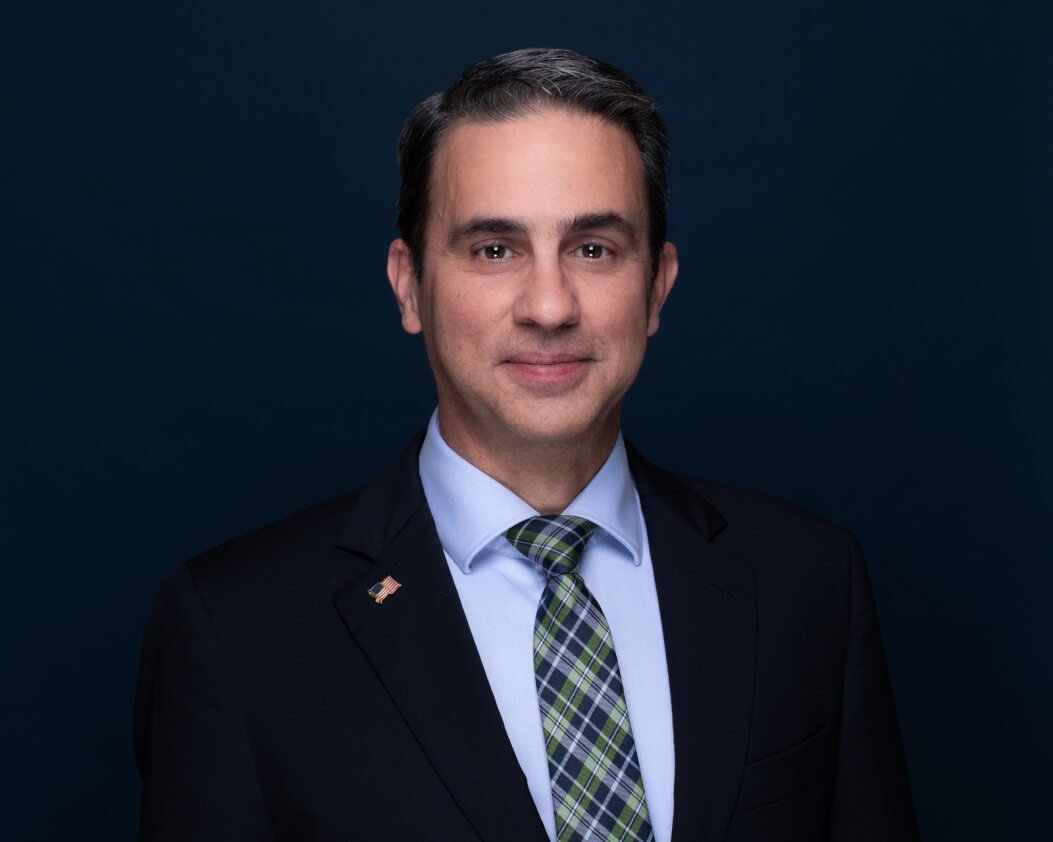
About the Author: Dr. Benjamin Cable, MD
Dr. Cable is a board-certified pediatric otolaryngologist and former Consultant to the Surgeon General with 25 years of experience. He sees patients at the ENT and Allergy Centers of Texas offices in Frisco and McKinney, TX. View full credentials.
Related care from Dr. Cable’s practice: Learn more about the McKinney office, explore our full ENT services, or visit the Frisco office on Teel Parkway.
This content is general educational information from Dr. Benjamin B. Cable, MD, and is not medical advice. Reading it does not create a doctor-patient relationship and is not a substitute for evaluation by a qualified physician who can account for your individual history and needs. If you have concerns about your or your child’s health, please consult your physician.